Back to all stories

People

The HIV Care Continuum

The second fight against HIV

Commissioned by
Sattva and USAID
Where
Bhiwandi, Maharashtra, India
When
2024

HIV is unique among the viruses that afflict humankind. For decades, a diagnosis was a slow death sentence, shadowed by opportunistic infections, the onset of AIDS, and the isolation of stigma and fear. The arrival of antiretroviral drugs in the 1990s was a modern miracle, suppressing the virus, holding back AIDS, and, by the World Health Organization's count, saving tens of millions of lives.

But treatment carries its own demands. Survival depends on lifelong regularity and discipline, increasingly so against drug resistance driven by viral mutation; a missed dose or an ignored symptom can have irreversible consequences. In India, ART centres, counselling, awareness campaigns, prevention initiatives, and Opioid Substitution Therapy (OST) centres form the backbone of the national HIV response. While ART centres help people living with HIV sustain treatment, visits to OST centres revealed another critical front: dedicated healthcare professionals and community champions working to prevent new infections among vulnerable population groups before they occur.

These images look into that ecosystem, the second fight against HIV: the fight after the miracle drugs to build awareness, sustain care, prevent transmission, and protect wellbeing before it is too late.
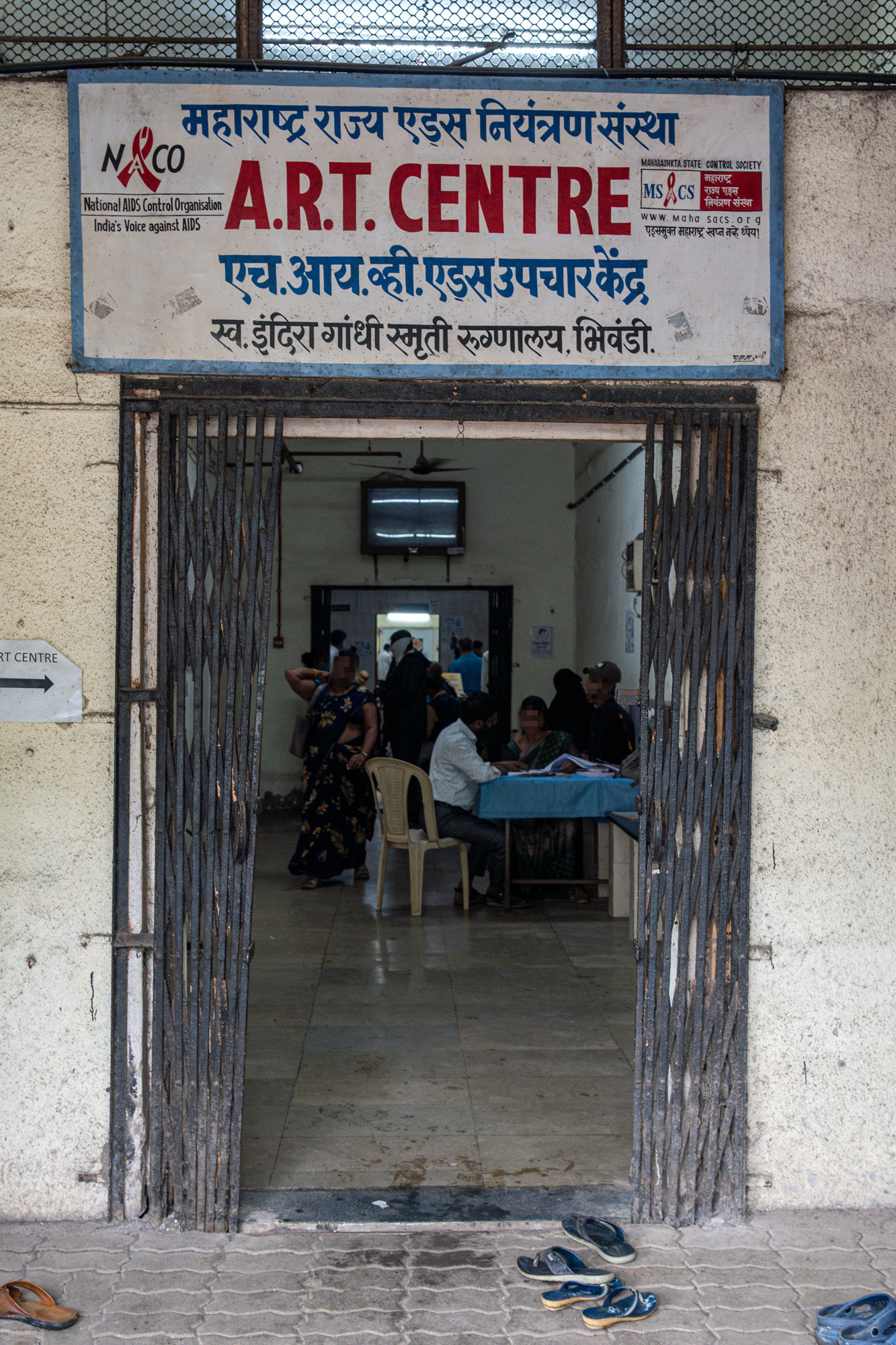
The barred doorway of the ART centre at a hospital in Bhiwandi, with staff and patients inside and sandals left at the entrance
The ART centre at Indira Gandhi Memorial Hospital, Bhiwandi, where people living with HIV receive their treatment.
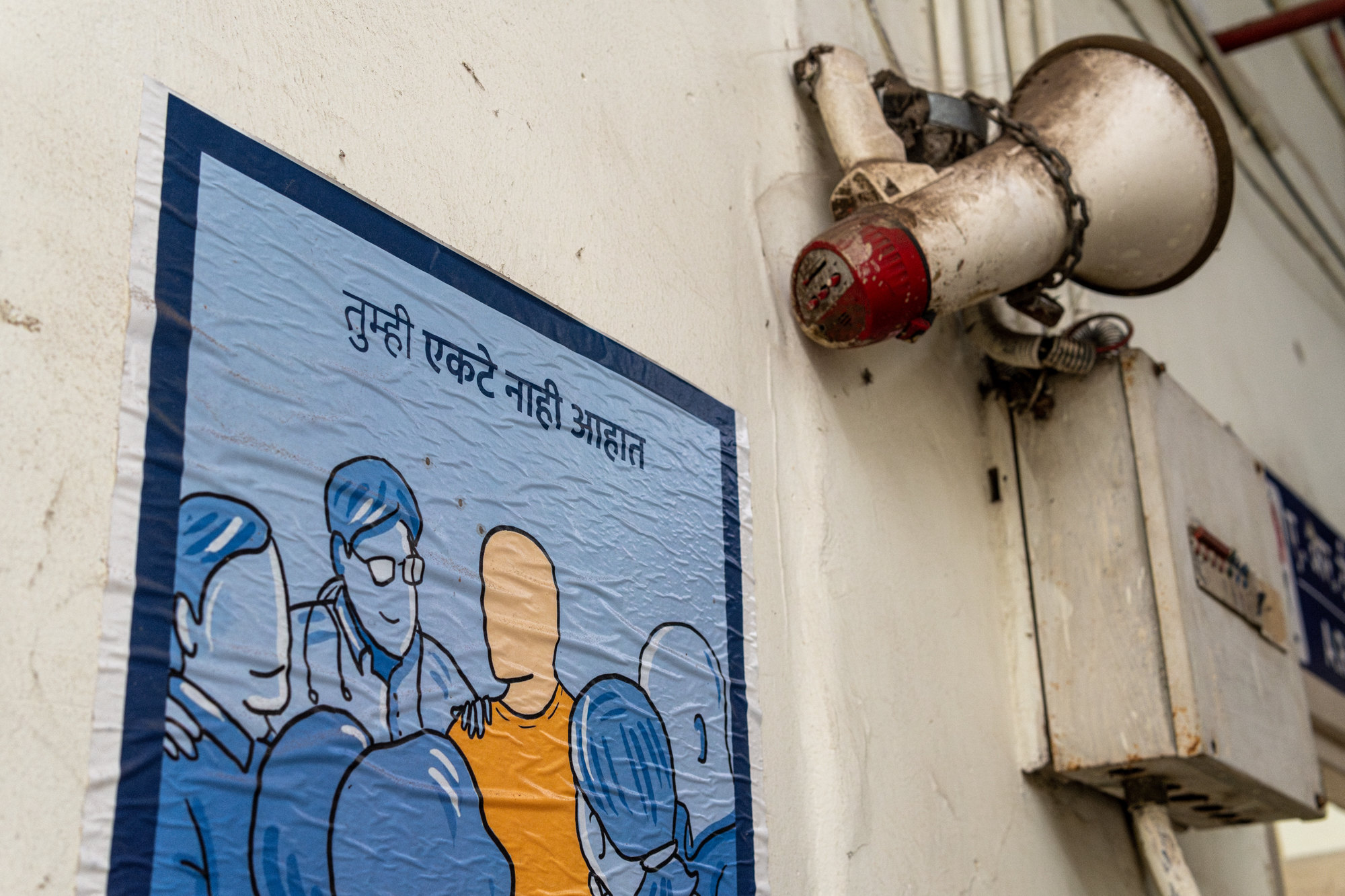
A Marathi poster showing a figure surrounded by supportive people, mounted beside an old loudspeaker
‘You are not alone’: a poster in Marathi, hung beside the hospital loudspeaker.
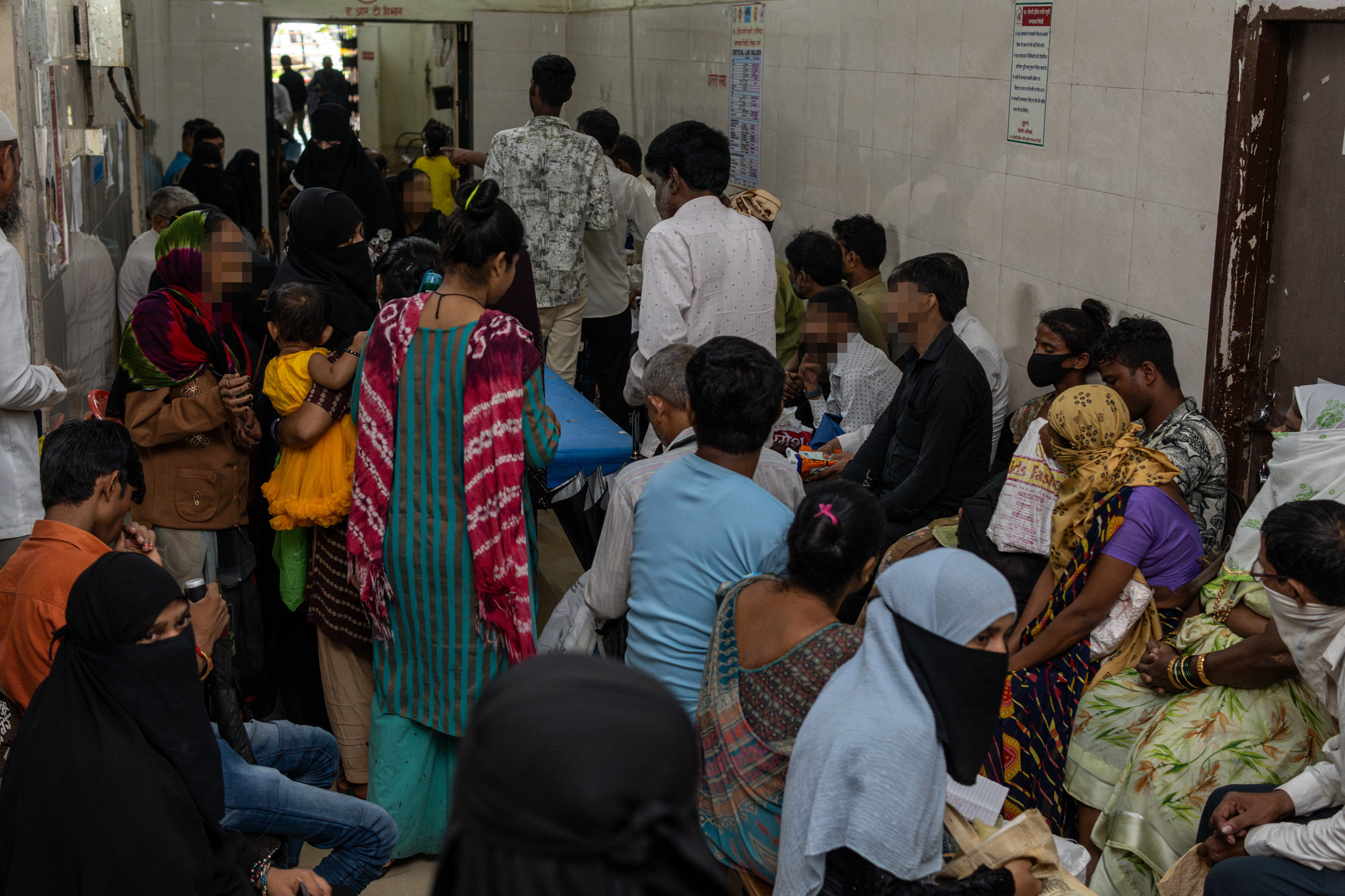
A crowded hospital corridor where patients and families sit and stand, waiting their turn
Patients and families wait their turn. Survival depends on lifelong regularity, one visit at a time.
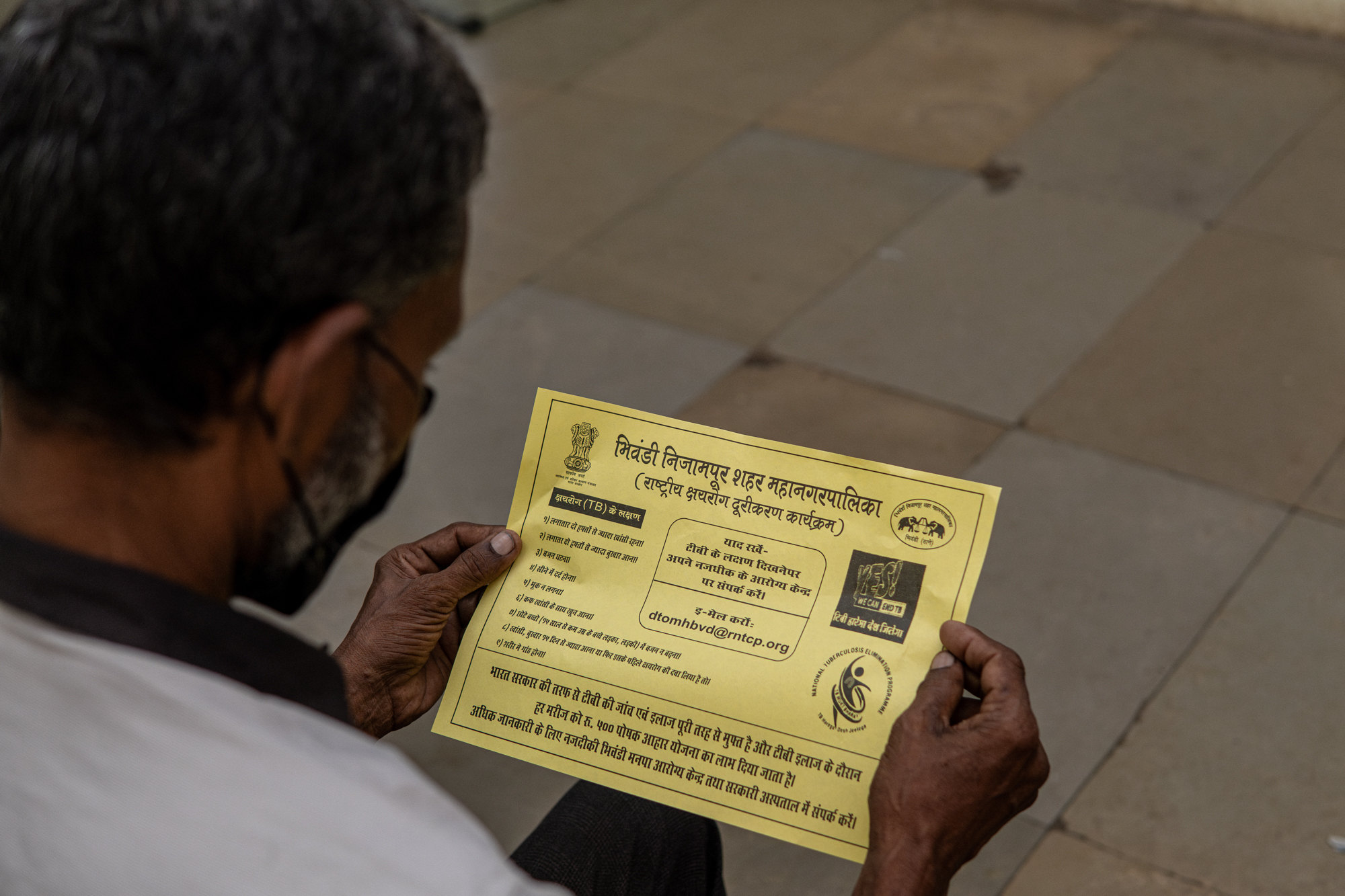
A man reads a yellow municipal leaflet in Hindi listing the symptoms of tuberculosis
A municipal leaflet lists the signs of tuberculosis and promises free testing and treatment.
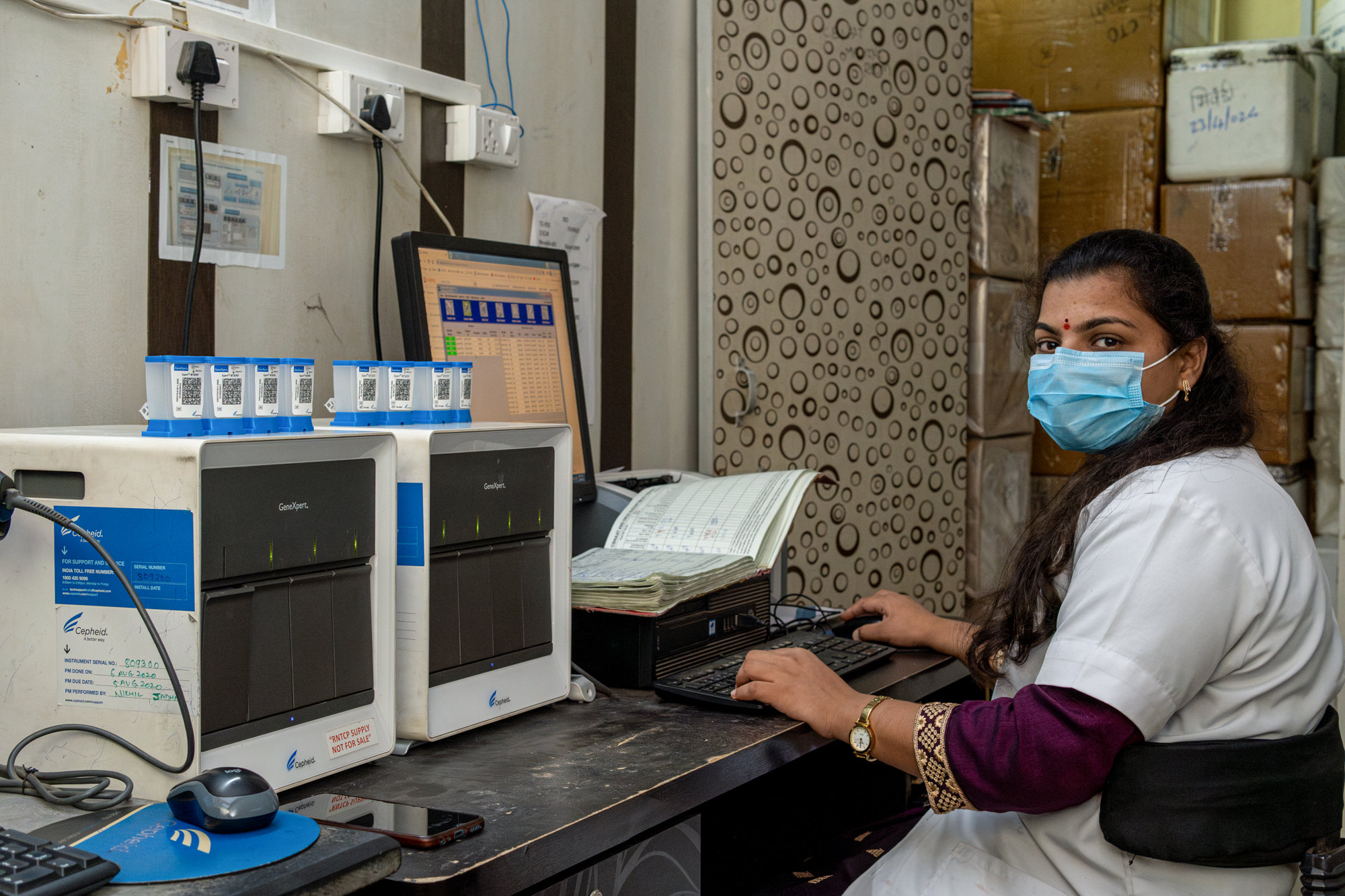
A lab technician in a mask works at a computer beside two GeneXpert testing machines
A lab technician records TB test results beside GeneXpert machines.
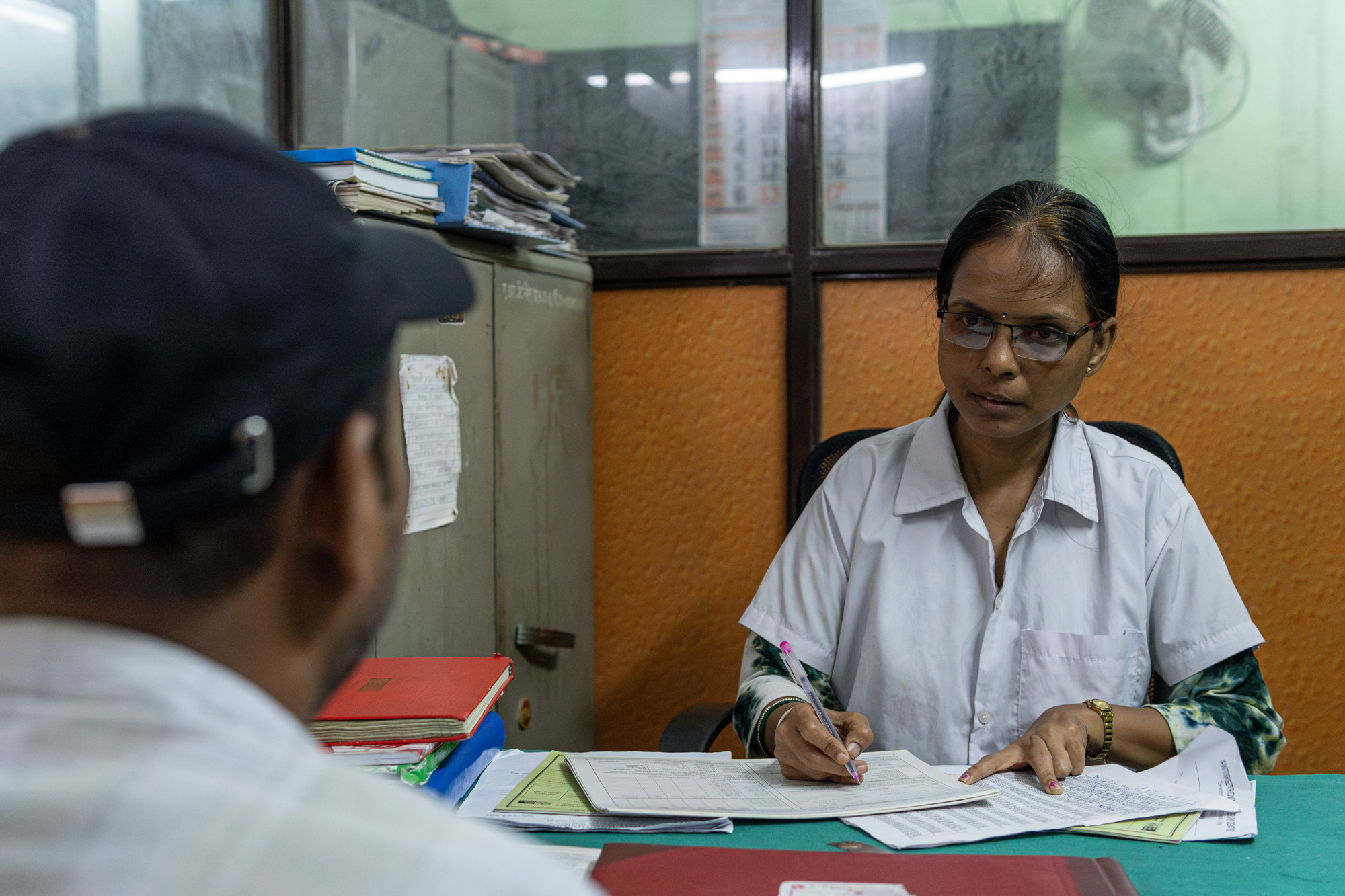
A counsellor in a white coat fills in a form while speaking with a man in a cap, seen from behind
In the counselling room, a patient's history is taken down by hand.
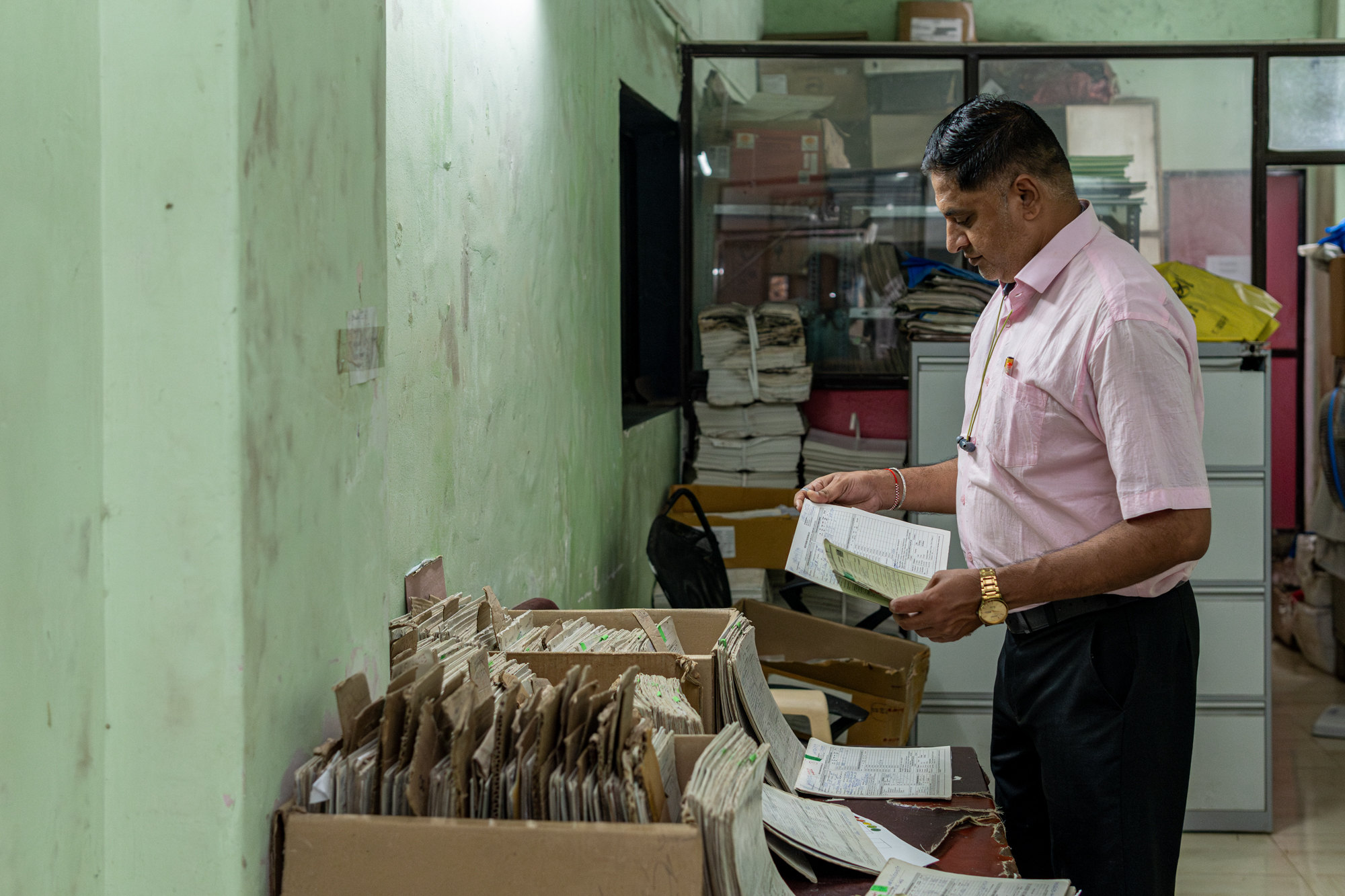
A man in a pink shirt sorts through boxes of worn patient files marked with coloured tags
Patient files, sorted by a colour code that keeps track of each person's care.
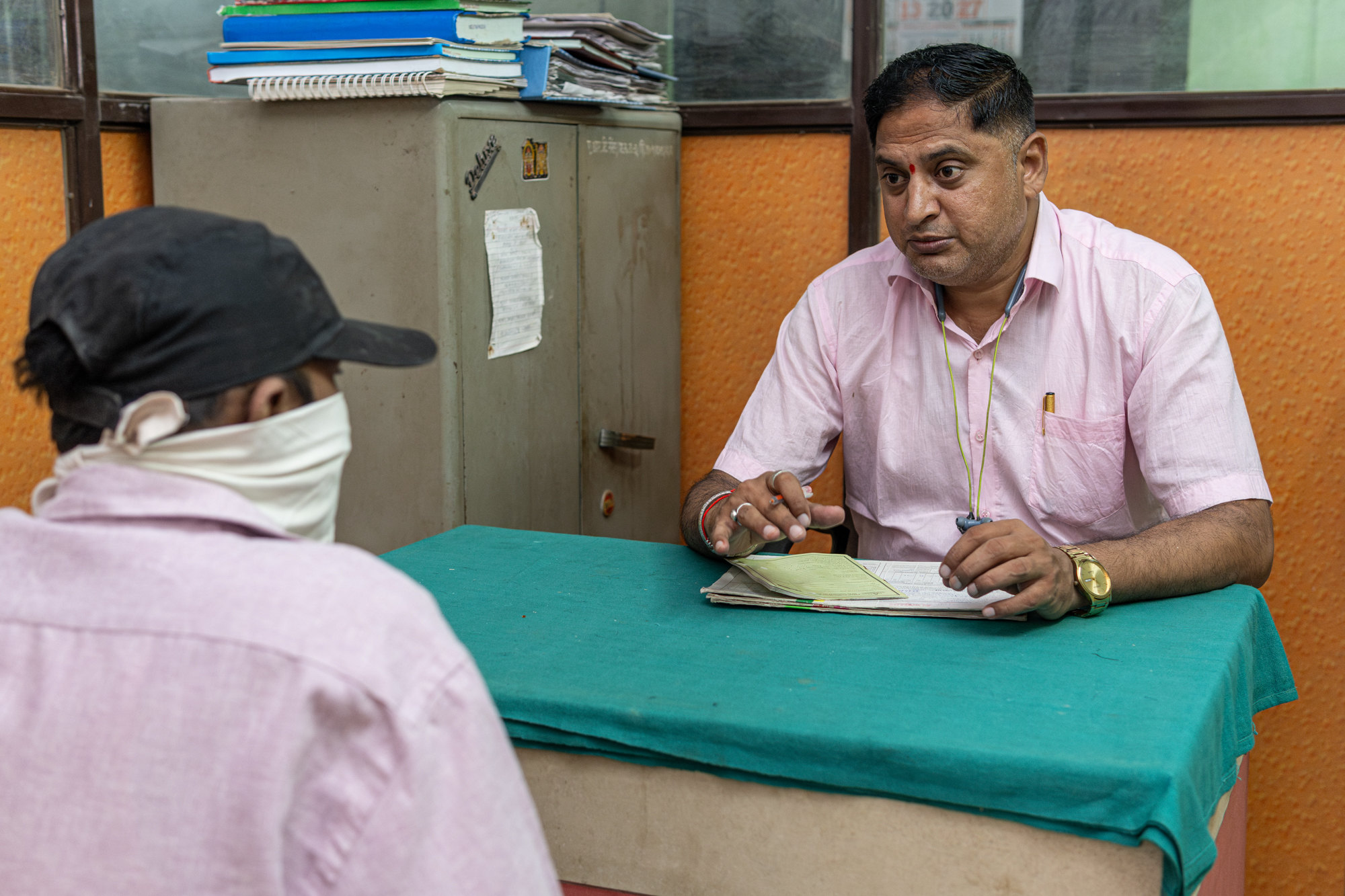
A counsellor in a pink shirt speaks with a client whose face is covered with a cloth
A counselling session, the client's face covered.
The data manager at an OST centre speaks with a client across his desk
The data manager at an Opioid Substitution Therapy centre, a front line in preventing new infections.
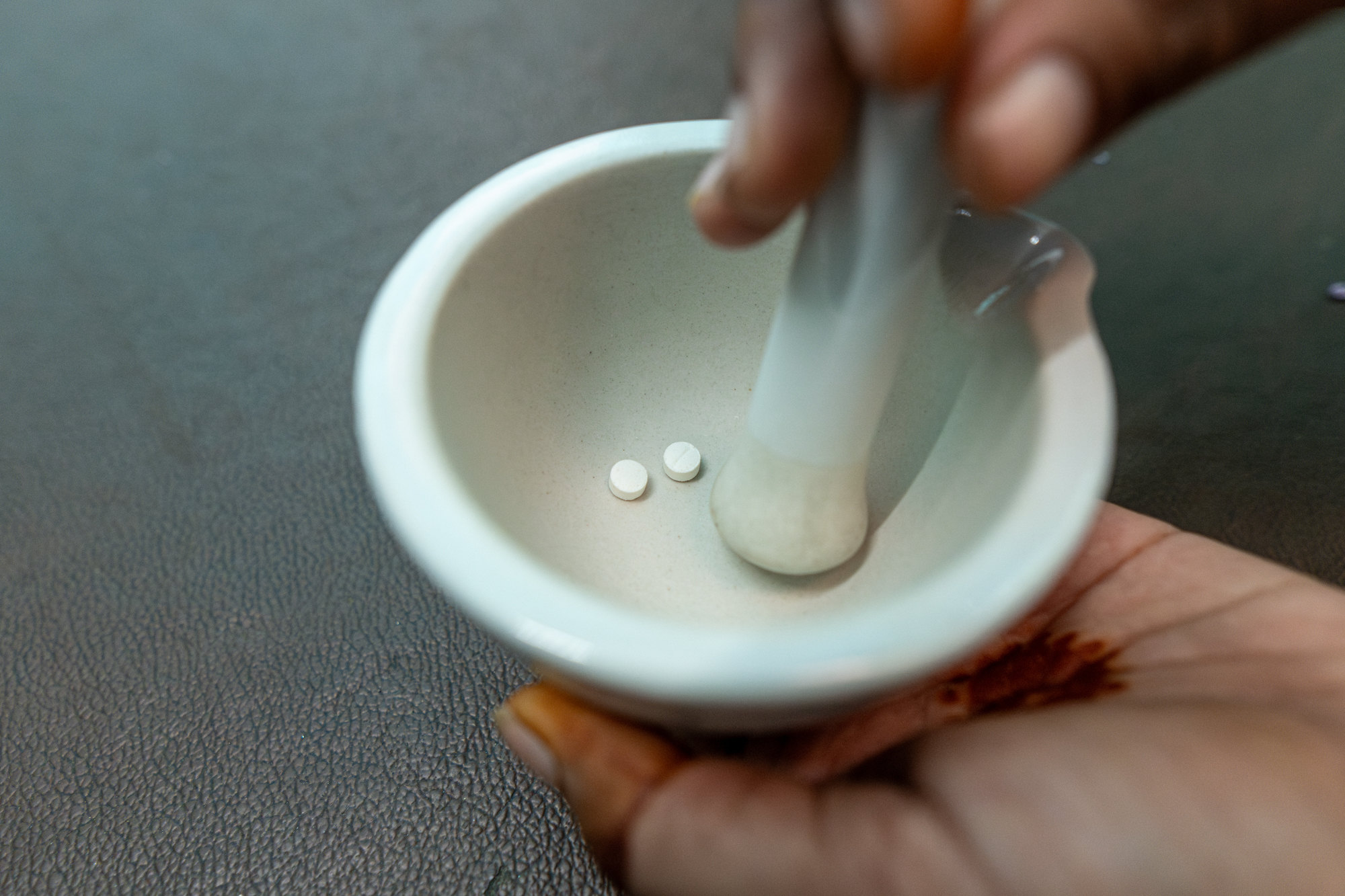
Two white OST tablets in a mortar as a hand holds the pestle
An OST dose, crushed before it is taken: an oral alternative to injecting drugs, and to the shared needles that spread HIV.
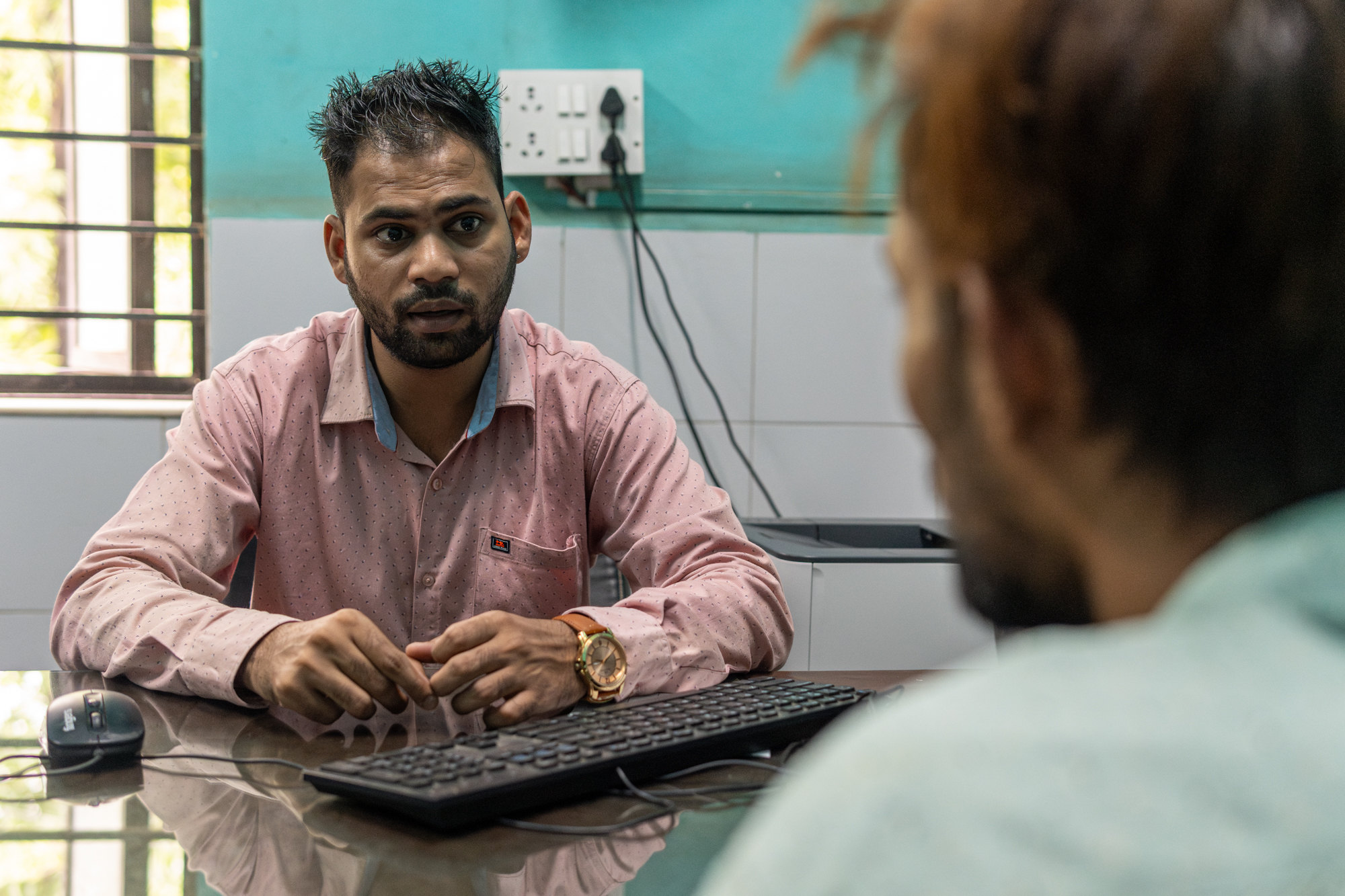
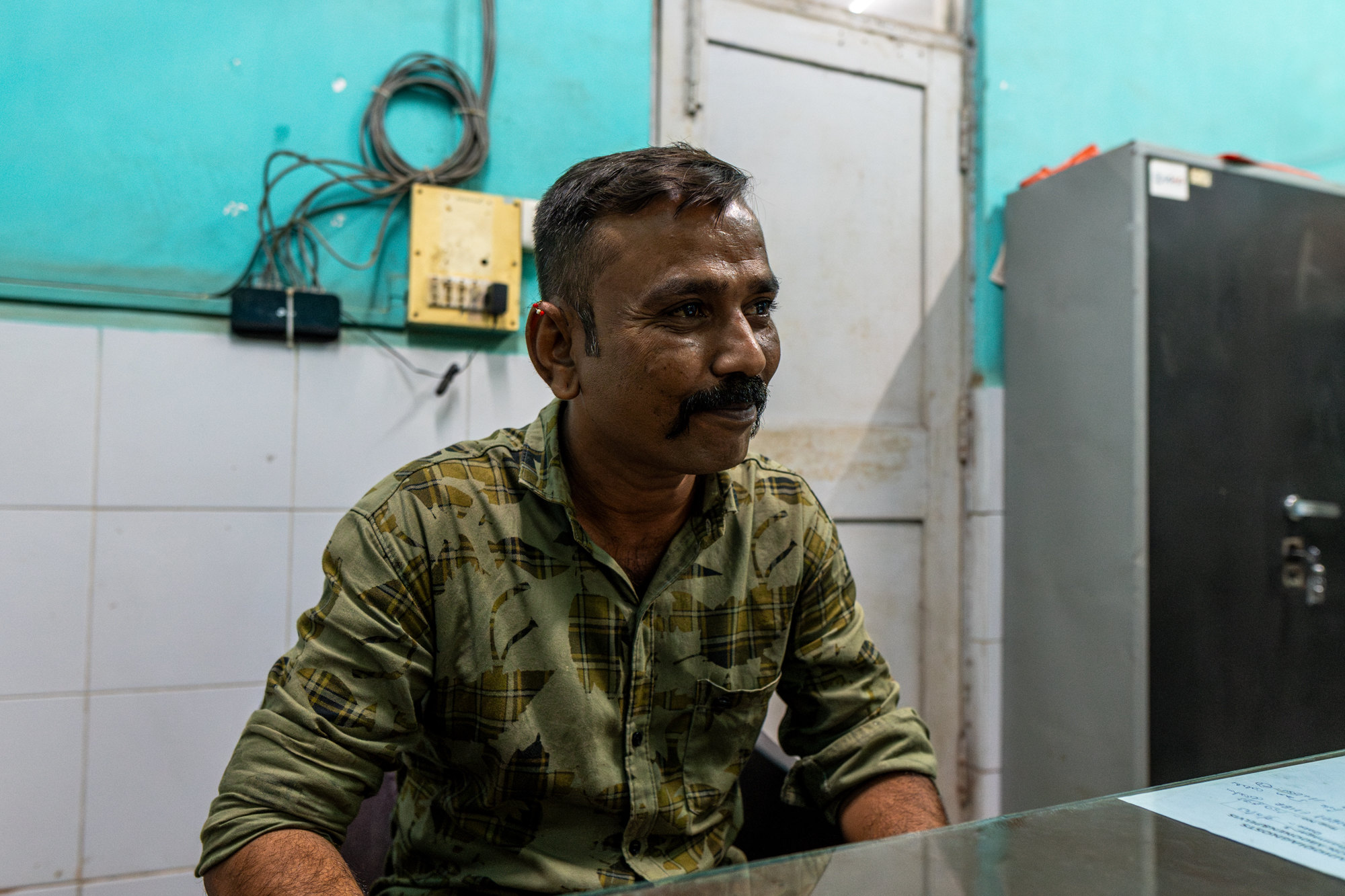
A smiling man in a patterned shirt sits at a desk in a turquoise-walled office
A community champion who helps mobilise participants for the OST centre.
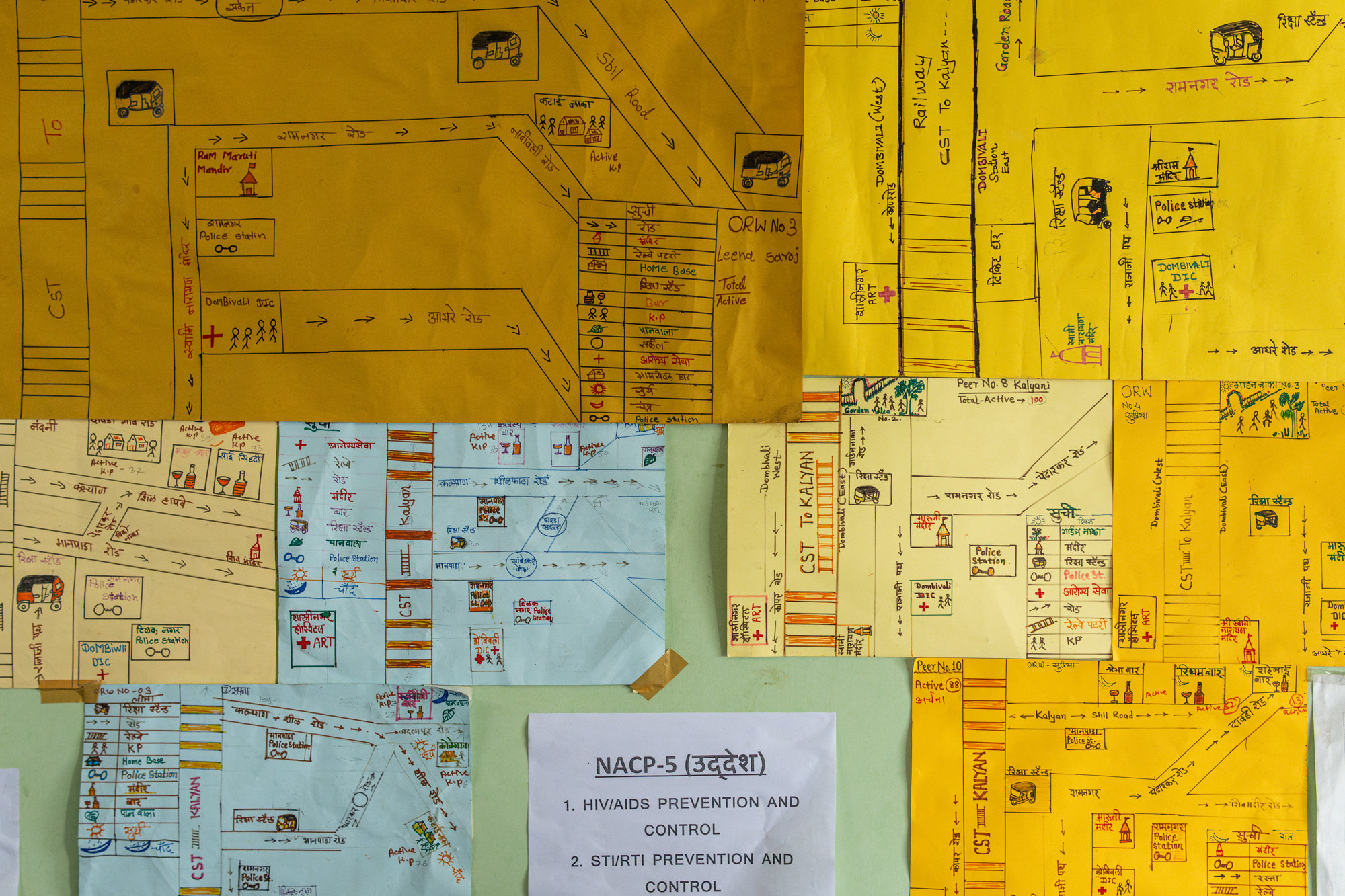
Hand-drawn outreach maps in Marathi and English, with pictures marking rickshaw stands, temples, police stations and health centres
Hand-drawn outreach maps that mark rickshaw stands, temples, police stations and clinics in pictures, made for sex workers who cannot read.

If the first round was won by medicine, the second round asks for a sociological and cultural intervention.

More From This Story